Apply least privilege
Give the agent only the repository access, target paths, and tools required for the task. Do not treat an agent as a reason to relax secret handling or environment separation.
 Day ShiftResources
Answer page
Use narrow tasks, least-privilege access, traceable evidence, and the same security and approval controls that apply to any other code change.
Direct answer
Coding agents can be used in sensitive repositories only within explicit controls: restrict access and scope, keep prompts and artifacts free of unnecessary secrets, require deterministic validation and human approval, and preserve a repository-visible record of what changed and why.
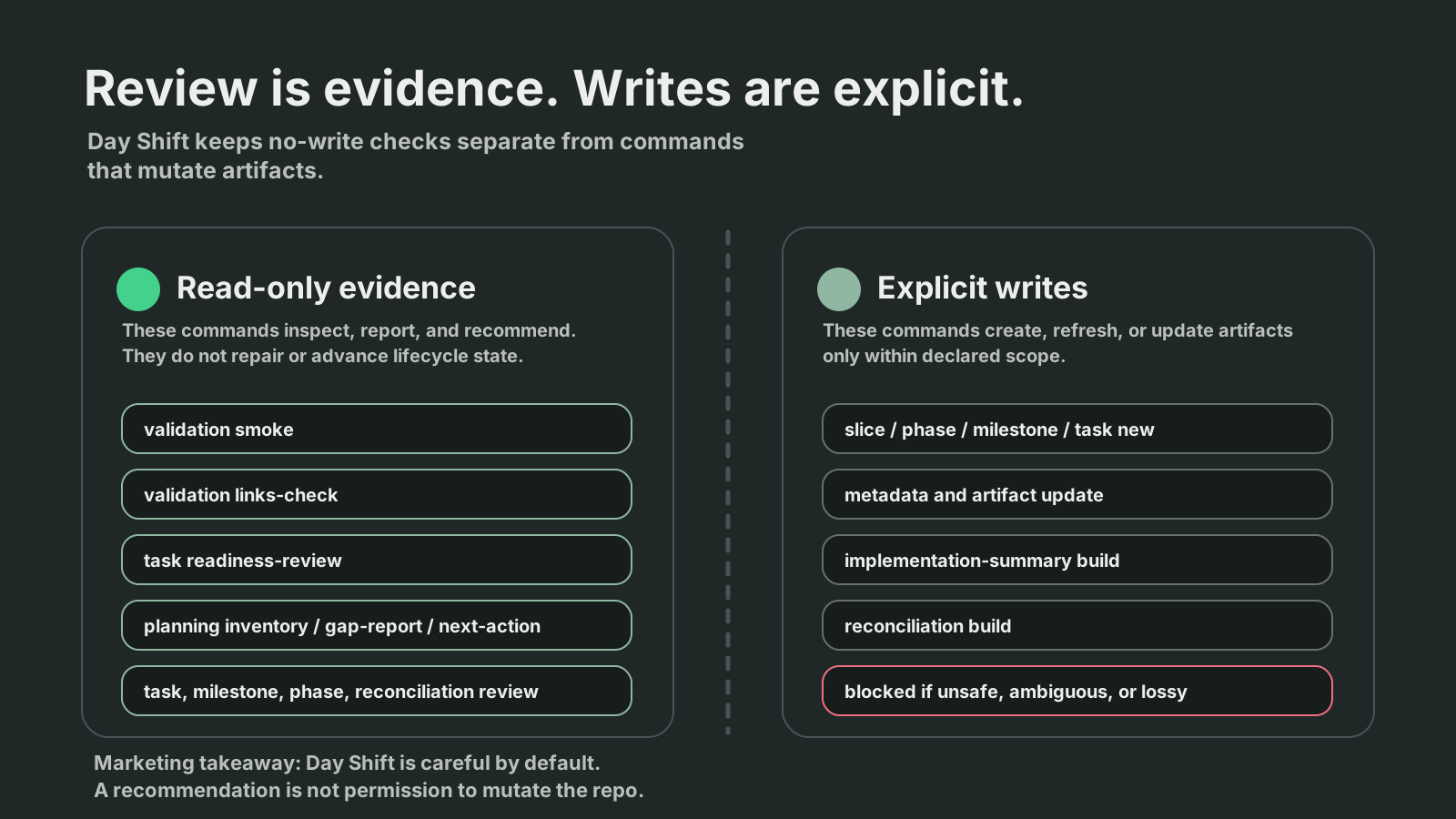
Practical guidance
Give the agent only the repository access, target paths, and tools required for the task. Do not treat an agent as a reason to relax secret handling or environment separation.
Task definitions, summaries, validation results, and pull requests provide reviewable evidence of the change boundary and approval decision.
An agent can produce work and evidence, but it cannot replace a required security, compliance, or accountable engineering approval.
Verified demo evidence
Repository-writing command
Prompt: "Run the declared test gate for this repository scope."
outcome: 1 test passed; 0 failed
Authorship and sources
Keep exploring
Clear triggers for moving coding-agent work to accountable human judgment.
Read nextUse declared target paths and escalation to prevent hidden scope expansion.
Read nextHow repository workflow artifacts complement existing pull-request, review, and CI controls.
Read nextFind your answer
Search practical answer pages and product context, then follow each result to the canonical workflow or reference owner.
Search by a problem, workflow step, or tool boundary, or choose a filter.