Begin with a low-risk boundary
Choose a task that has clear acceptance criteria, limited target paths, and an executable check. Do not make the first trial a broad refactor or a production-critical migration.
 Day ShiftResources
Answer page
Start with one bounded, reversible task and establish repository-visible validation and review evidence before expanding use.
Direct answer
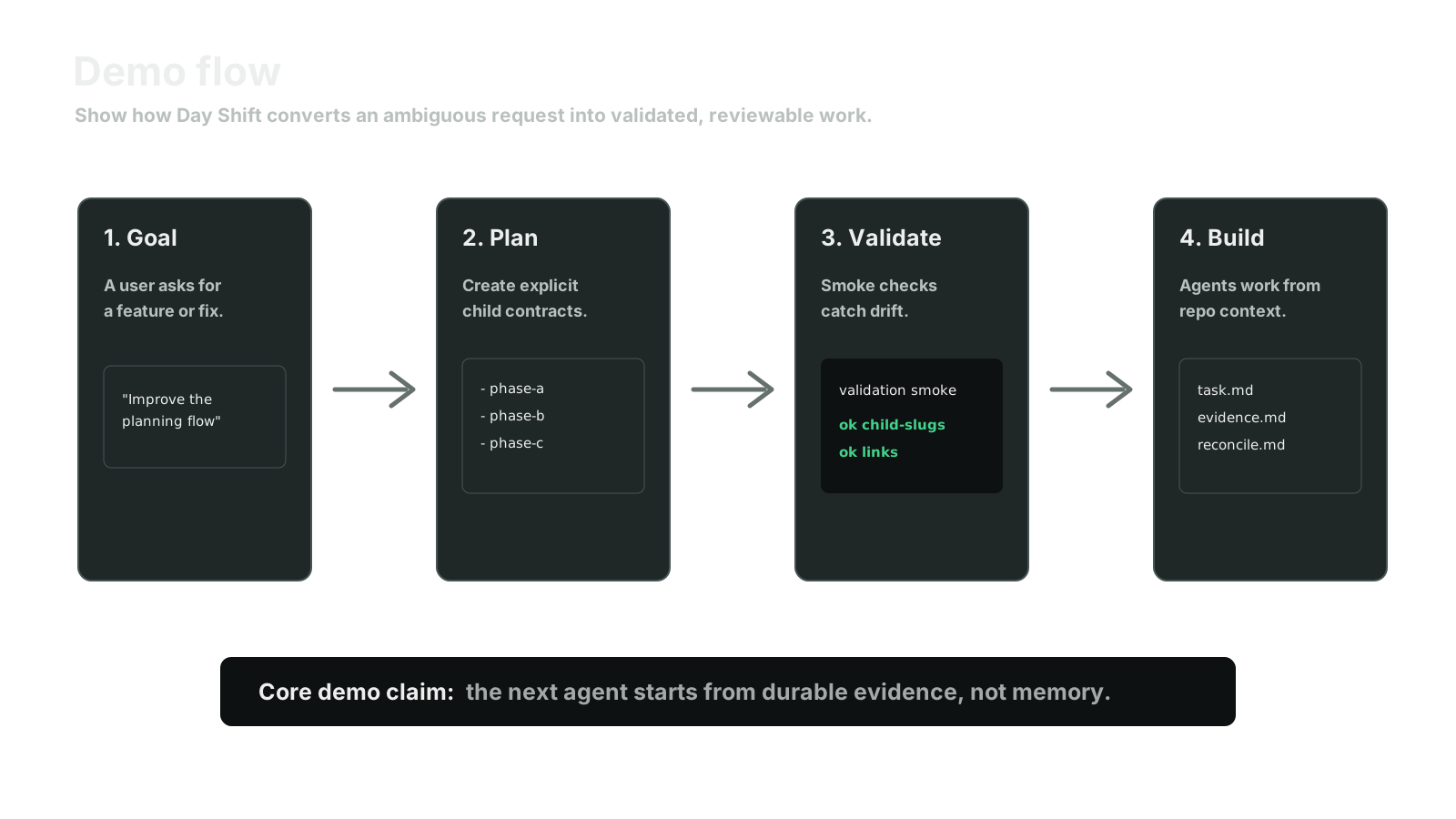
Introduce coding agents one scoped task at a time. Start with an existing testable area, declare allowed paths and validation before work begins, require an implementation summary, and keep a human approval point before any broader rollout.
Practical guidance
Choose a task that has clear acceptance criteria, limited target paths, and an executable check. Do not make the first trial a broad refactor or a production-critical migration.
Pull requests, CI, code owners, and security review remain in place. The agent workflow should add a durable handoff contract, not bypass the controls your repository already uses.
Use completed task summaries and review outcomes to decide which kinds of work can safely become routine. Treat each new category as a separate operating decision.
Verified demo evidence
Repository-writing command
Prompt: "Initialize this repository for Day Shift."
outcome: Created .day-shift workspace
Next: run day-shift doctor
Authorship and sources
Keep exploring
The objective, scope, acceptance criteria, and validation a coding agent needs before changing code.
Read nextUse declared target paths and escalation to prevent hidden scope expansion.
Read nextMake coding-agent work reviewable with bounded repository artifacts, named validation, and written implementation evidence.
Read nextFind your answer
Search practical answer pages and product context, then follow each result to the canonical workflow or reference owner.
Search by a problem, workflow step, or tool boundary, or choose a filter.