Trackers answer why and when
The ticket is the right place for priority, owner, roadmap context, and coordination. Day Shift does not replace that team-management layer.
 Day ShiftResources
Answer page
Keep planning and coordination in your tracker; govern the implementation contract and validation evidence in the repository.
Direct answer
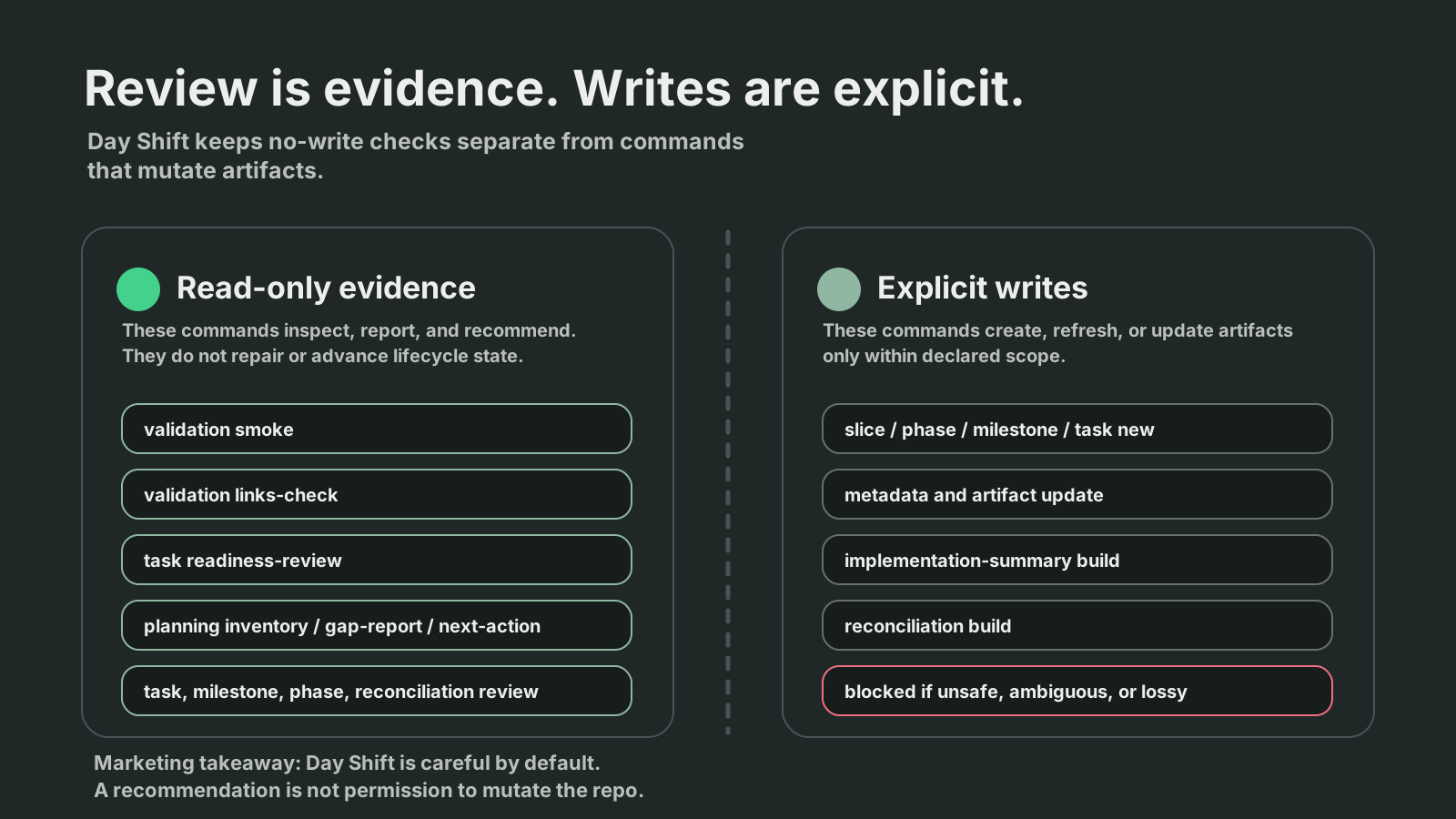
Jira and Linear should keep owning prioritization, ownership, and cross-team status. Repository-level governance should own the coding-agent boundary: exact scope, target paths, validation, implementation evidence, and acceptance review beside the code that changed.
Practical guidance
The ticket is the right place for priority, owner, roadmap context, and coordination. Day Shift does not replace that team-management layer.
The task definition and implementation summary hold the implementation-specific contract and evidence. Keeping them near the code makes review and later maintenance more reliable.
Reference the ticket from the repository work and link the reconciliation result back to the ticket. Each system retains the facts it is best positioned to govern.
Verified demo evidence
Repository-writing command
Prompt: "Build milestone reconciliation evidence from current task and validation state."
outcome: reconciliation_status: completed
Authorship and sources
Keep exploring
How Day Shift works alongside Jira and Linear instead of replacing them, managing the implementation contract inside the repository.
Read nextMake coding-agent work reviewable with bounded repository artifacts, named validation, and written implementation evidence.
Read nextA practical checklist for handing work to a coding agent and receiving reviewable implementation evidence back.
Read nextFind your answer
Search practical answer pages and product context, then follow each result to the canonical workflow or reference owner.
Search by a problem, workflow step, or tool boundary, or choose a filter.