Assistants are execution interfaces
Codex, Claude Code, and other assistants can read context, propose changes, and run tools. Their sessions are useful but tool-specific and temporary.
 Day ShiftResources
Answer page
A coding assistant performs work in a session; an agent workflow defines the durable repository contract, evidence, and review process around that work.
Direct answer
An AI coding assistant is the tool or agent that helps explore and change code. A coding-agent workflow is the repository-native system that defines what the work is, constrains it, validates it, records evidence, and hands it off for review across tools and sessions.
Practical guidance
Codex, Claude Code, and other assistants can read context, propose changes, and run tools. Their sessions are useful but tool-specific and temporary.
A workflow keeps intent, scope, validation, evidence, and acceptance in repository files that survive a tool change or a new agent session.
The workflow gives the assistant a bounded task and gives the human reviewer a clear evidence trail. Neither layer replaces the other.
Verified demo evidence
Repository-writing command
Prompt: "Initialize this repository for Day Shift."
outcome: Created .day-shift workspace
Next: run day-shift doctor
Authorship and sources
Keep exploring
A practical coding-agent workflow from durable intent to scoped tasks, validation evidence, human review, and cross-session handoff. See where Day Shift fits.
Read nextWhat belongs in versioned repository artifacts when coding assistants do the implementation work.
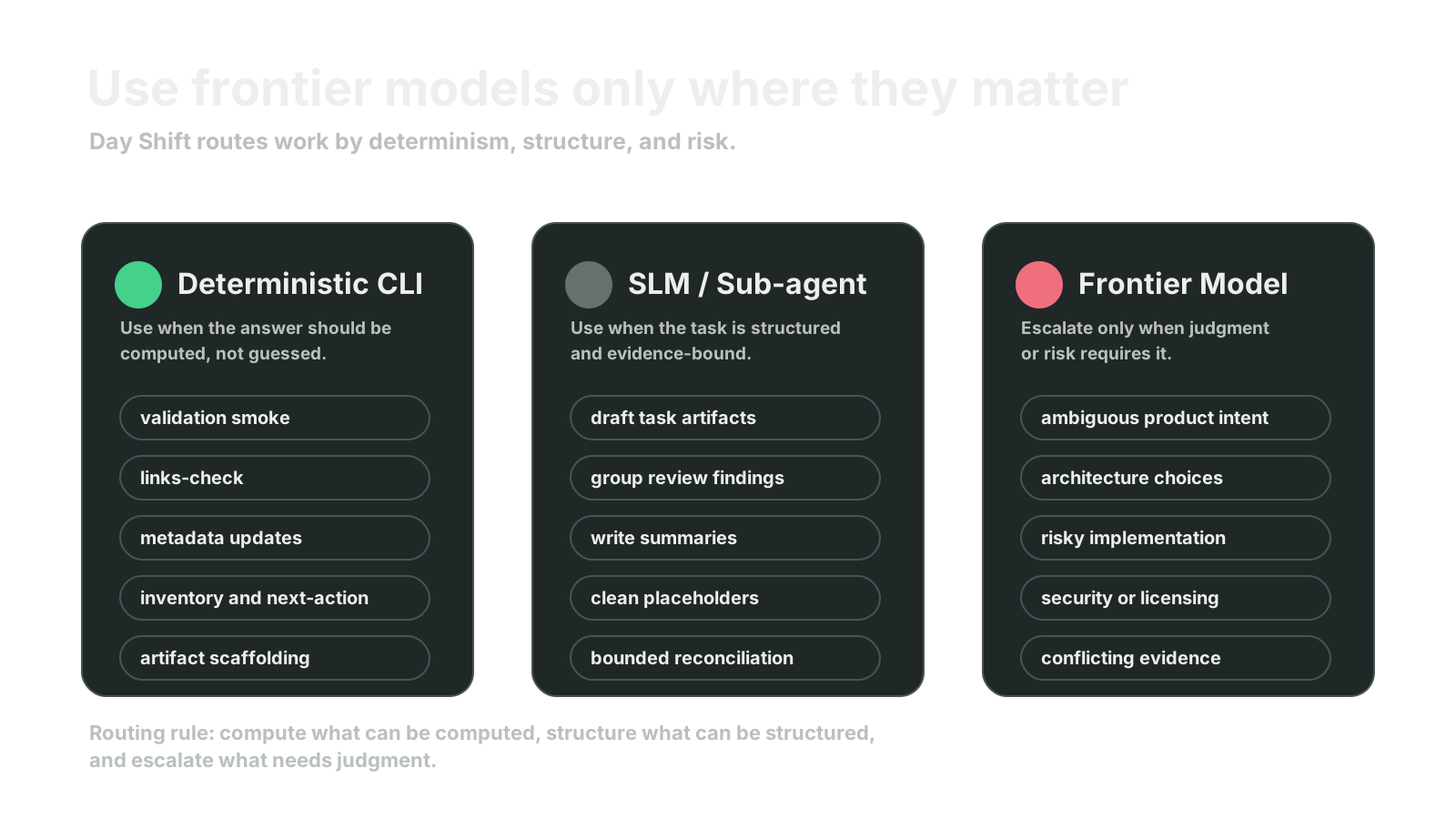
Read nextSeparate repeatable workflow checks from model-assisted work and human judgment.
Read nextPlain-language explanation of the Human-Agent-Contract: explicit intent, scope, validation, evidence, and reconciliation for coding-agent work.
Read nextFind your answer
Search practical answer pages and product context, then follow each result to the canonical workflow or reference owner.
Search by a problem, workflow step, or tool boundary, or choose a filter.