Automate repeatable checks
A rule that can be stated precisely should be executable. This reduces review effort and avoids asking a model to remember policy details that tooling can enforce.
 Day ShiftResources
Answer page
Make structure, scope checks, and validation deterministic; use models for interpretation, implementation, and human-supervised judgment where ambiguity remains.
Direct answer
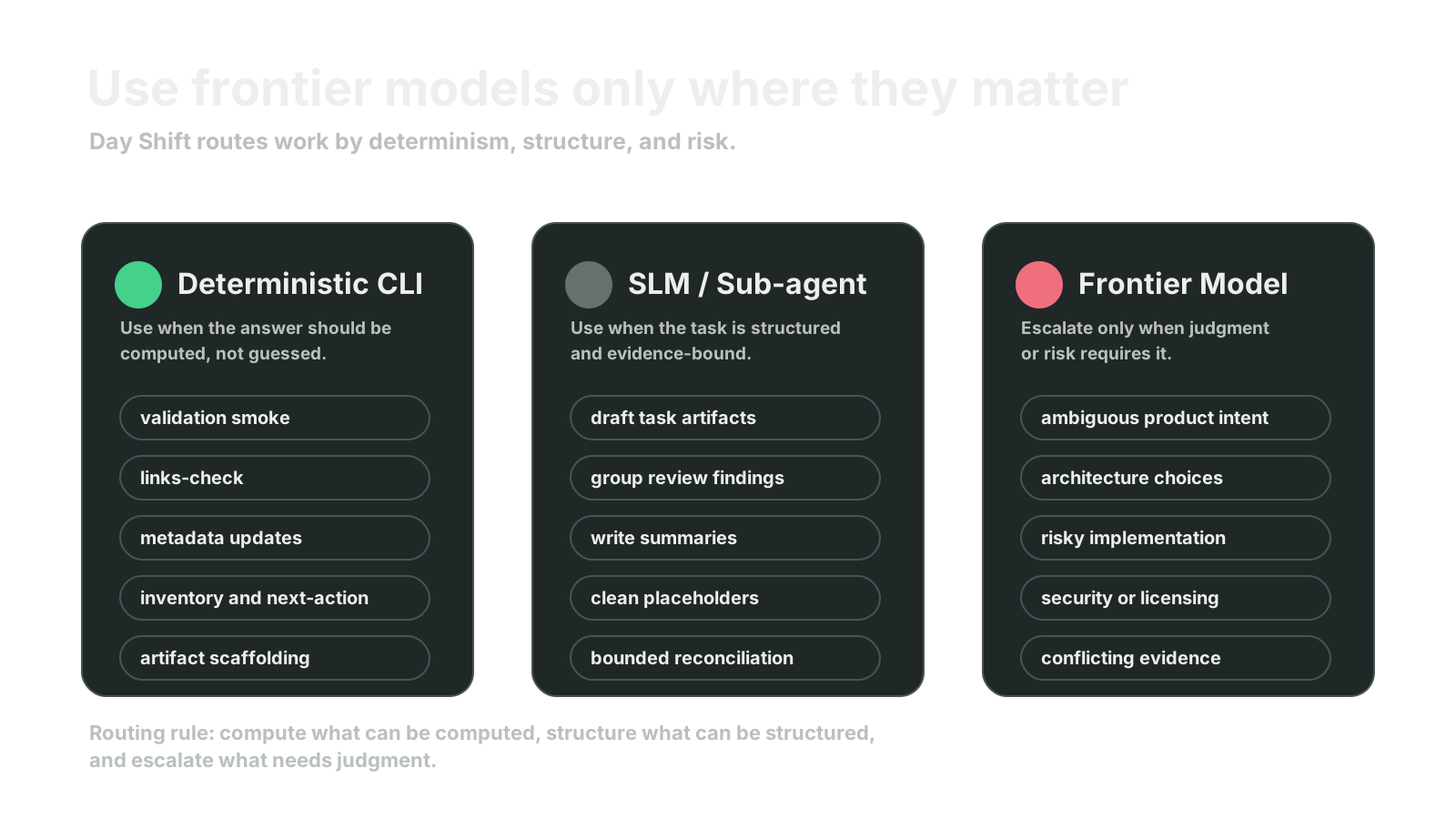
Use deterministic tooling for repeatable facts: artifact structure, readiness, scoped paths, validation commands, and evidence presence. Use coding agents for implementation and analysis within that structure, and reserve human judgment for ambiguous intent, risk, and acceptance decisions.
Practical guidance
A rule that can be stated precisely should be executable. This reduces review effort and avoids asking a model to remember policy details that tooling can enforce.
Agents are useful for exploration, code changes, and synthesis, but their results should remain bounded by deterministic constraints and observable validation.
Product tradeoffs, exceptions, security risk, and conflicting evidence require an explicit accountable decision, even when an agent provides analysis.
Verified demo evidence
Repository-writing command
Prompt: "Initialize this repository for Day Shift."
outcome: Created .day-shift workspace
Next: run day-shift doctor
Authorship and sources
Keep exploring
Clear triggers for moving coding-agent work to accountable human judgment.
Read nextThe distinction between an execution tool and a durable repository workflow contract.
Read nextPlain-language explanation of the Human-Agent-Contract: explicit intent, scope, validation, evidence, and reconciliation for coding-agent work.
Read nextFind your answer
Search practical answer pages and product context, then follow each result to the canonical workflow or reference owner.
Search by a problem, workflow step, or tool boundary, or choose a filter.